
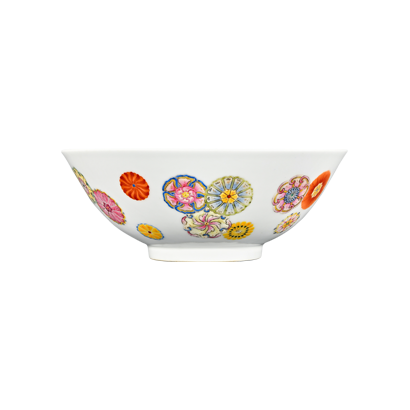
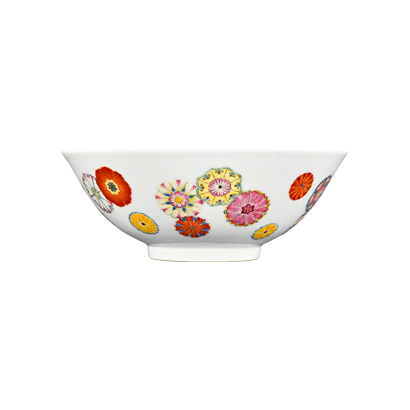
Lot 63: Famille Rose Bowl 粉彩皮球花纹碗
清雍正 Qing Dynasty, Yongzheng Period
Description
来源:于八十年代初购自东陵古董商店
Provenance: Acquired from a Tanglin antique shop in the early 1980s
Diameter 口径 15.6 cm Height 高 6 cm Foot Diameter 足径 5.9 cm
Guide Price 起拍价: SGD 500,000
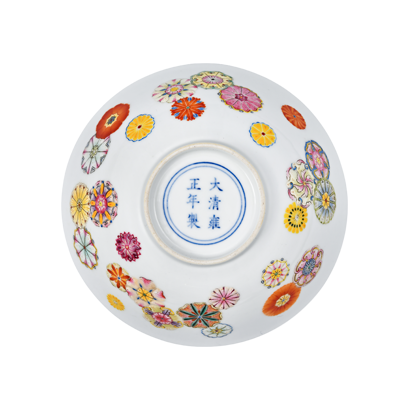
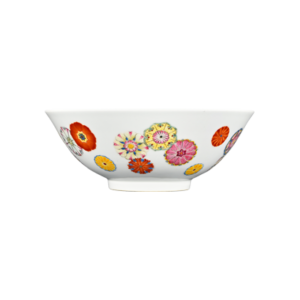
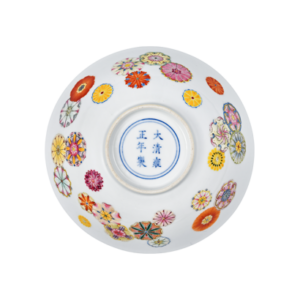
侈口,弧腹,圈足。碗外壁以粉彩绘皮球花纹,纹样呈雪花状、菊瓣形、四叶梅花形等十余种形态,色彩包含粉、橙、黄、蓝、紫等,每朵花形态各异,无一雷同。布局疏密有致,体现了雍正时期“繁而不乱”的特点。整器釉面温润,色彩柔和淡雅;胎质细腻洁白,胎体轻薄。底部以青花书“大清雍正年制”双圈六字双行楷书款,字体工整清秀。雍正粉彩皮球花碗存世量稀少,故宫博物院藏有同类器物。皮球花又称团花,清代叫绣球花,其组合形式多样,以外观似球状而名。
粉彩创烧于康熙晚期,成熟于雍正、乾隆两代。粉彩在彩绘中以渲染表现明暗,使每一种颜色都有不同层次的变化。《饮流斋说瓷》中说“软彩又名粉彩,谓彩色稍淡,有粉匀之也。硬彩华贵而深凝,粉彩艳丽而清逸。”粉彩的施绘工艺是先用含砷的“玻璃白”打底,彩料有用芸香油调合。乾隆时的清宫档案对粉彩则称之为“洋彩”。
The bowl is potted with a flared mouth, rounded sides and a ring foot. The exterior is decorated in famille rose enamels with “ball-flower” motifs, rendered in more than ten different forms, including snowflake, chrysanthemum-petal and four-petalled prunus shapes. The palette includes pink, orange, yellow, blue, purple and other tones. Each flower is individually conceived, with no two exactly alike. The arrangement is balanced between density and openness, reflecting the Yongzheng-period characteristic of being “elaborate yet not crowded.”
The glaze is warm and lustrous, and the colours are soft and elegant. The body is fine and white, and the vessel is thinly potted. The base is inscribed in underglaze blue, within double circles, with the six-character mark in two vertical lines in regular script: “Da Qing Yongzheng nian zhi” — “Made in the Yongzheng reign of the Great Qing dynasty.” The calligraphy is neat and graceful. Yongzheng famille rose bowls decorated with ball-flower motifs are rare among surviving examples, and a comparable piece is preserved in the Palace Museum. The ball-flower motif, also known as a roundel-flower design and referred to in the Qing dynasty as xiuhua or “embroidered ball flowers”, takes its name from its spherical appearance and appears in a wide variety of combinations.
First developed in the late Kangxi period, famille rose reached maturity during the Yongzheng and Qianlong reigns. In famille rose painting, shading was used to render light and dark, allowing each colour to show subtle tonal gradations. The Yinliu zhai shuo ci states: “Soft colours, also known as famille rose, are so called because the colours are somewhat pale and evenly blended with white. Hard colours are sumptuous and deeply concentrated, while famille rose is brilliant and elegant.” In the famille rose process, the design was first prepared with an arsenic-bearing “glass white” ground, and the pigments were mixed with rue oil. In the Qing imperial archives of the Qianlong period, famille rose was referred to as “foreign enamels” (yangcai).
All descriptions, dates, authorship, attribution, origin, provenance, condition, estimates and starting prices are statements of opinion and/or information provided by the seller and are not statements of fact or warranties by Knight Frank. Bidders should inspect the Lot and make their own independent enquiries before bidding.