
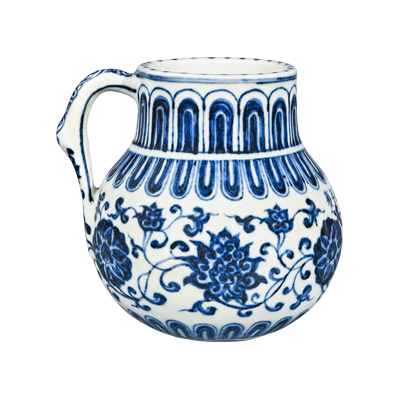
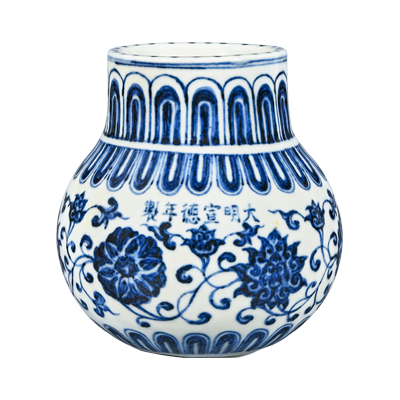
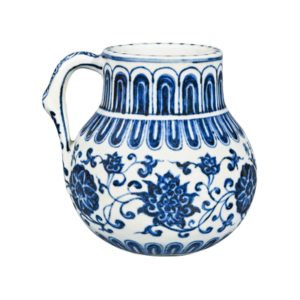
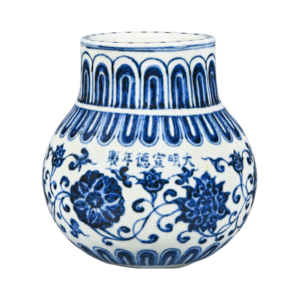
Lot 45: Blue and White Single-handled Jar with Floral Pattern 青花缠枝花卉纹单把罐
明宣德 Ming Dynasty, Xuande Period
Description
来源:于八十年代购自台北古玩中心古董商店
Provenance: Acquired from an antique shop at the Taipei Antique Centre in the 1980s
Diameter 口径 7.7 cm Height 高 13 cm Foot Diameter 足径 6 cm
Guide Price 起拍价: SGD 1,000,000
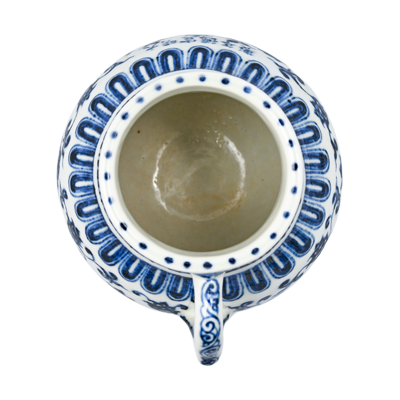
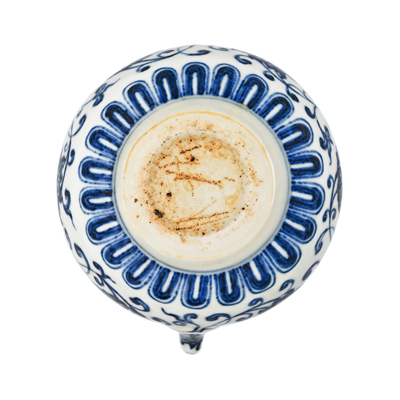
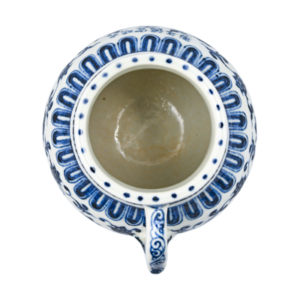
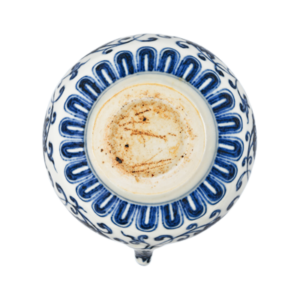
直口,阔颈,颈部与腹部有一螭龙柄相连,卧足,涩底露胎。内外施釉,外壁以青花装饰,颈外壁绘仰莲瓣,底部纹饰首尾呼应,器身主体纹饰为缠枝花卉纹饰,腹部满绘缠枝牡丹、莲花等纹样,枝蔓连绵舒展,花型饱满生动。
花浇为宣德青花瓷器中的典型外销器型,此件为御窑供宫廷使用的仿伊斯兰风格器物,是明代早期中外文化交流的见证。故宫博物院、上海博物馆、景德镇御窑博物院等文博机构亦有类似藏品。
The vessel has a straight mouth, a broad neck and a recumbent foot, with a chilong-shaped handle connecting the neck and the body. The base is unglazed, revealing the biscuit body. The vessel is glazed both inside and out, and the exterior is decorated in underglaze blue. The neck is painted with upright lotus petals, echoed by corresponding motifs around the base. The principal decoration consists of scrolling floral designs, the body densely painted with scrolling peonies, lotus and other floral motifs. The tendrils extend in a continuous, flowing composition, while the blossoms are full and lively in form.
The kendi, also known in Chinese as a huajiao, is a typical export form among Xuande-period blue-and-white porcelains. This example, produced by the imperial kilns for court use, reflects an Islamic-inspired form and stands as evidence of cultural exchange between China and the wider world during the early Ming dynasty. Similar examples are preserved in institutions including the Palace Museum, the Shanghai Museum and the Jingdezhen Imperial Kiln Museum.
All descriptions, dates, authorship, attribution, origin, provenance, condition, estimates and starting prices are statements of opinion and/or information provided by the seller and are not statements of fact or warranties by Knight Frank. Bidders should inspect the Lot and make their own independent enquiries before bidding.